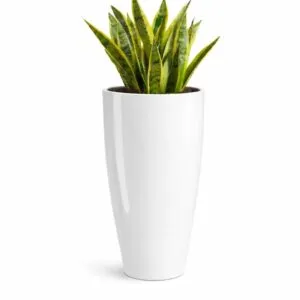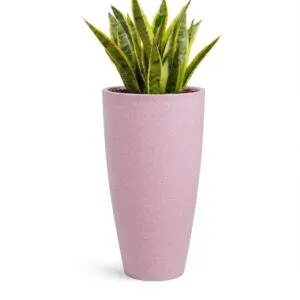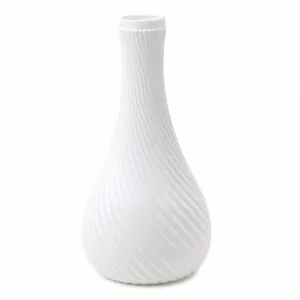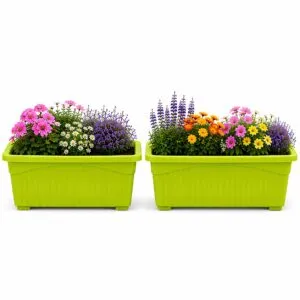


Shopping for a big planter for your terrace, lobby or office entrance? You will mostly see three kinds: roto (rotomoulded plastic), FRP (fibreglass) and cement. They look similar in photos but behave very differently in daily use. Here is a plain roto vs FRP vs cement planters comparison to help you choose.
What each material is
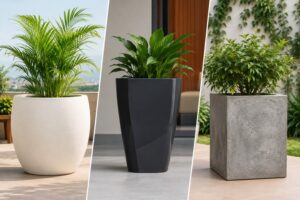
- Roto planters are made by rotational moulding. Plastic powder is melted inside a rotating mould, so the planter comes out as one seamless piece with no joints.
- FRP planters are made from fibre-reinforced plastic (fibreglass sheets and resin). They usually have a glossy, painted finish.
- Cement planters are cast from cement or concrete, sometimes with a textured or stone-like finish.
Roto vs FRP vs cement planters: side-by-side comparison
| Roto | FRP | Cement | |
|---|---|---|---|
| Weight | Light | Light | Very heavy |
| If it falls or is hit | Usually survives, no joints to split | Can crack or chip | Can crack or break |
| Moving it around | Easy | Easy | Needs 2 people or more |
| Load on a balcony or terrace | Low | Low | High |
| Look | Matte, modern | Glossy, premium | Natural, rustic |
| Upkeep | Wipe clean | Paint can fade or scratch | Can stain and absorb water |
Which one should you choose?
- Choose roto for balconies, terraces, offices, cafes and societies, where planters get moved, bumped or cleaned often and weight matters.
- Choose FRP for indoor spaces where a glossy, showroom look matters most and the planter will rarely be moved.
- Choose cement for ground-level gardens where the planter will stay in one place for years.
Weight matters more than you think
A large planter full of wet soil is already heavy. On an upper-floor balcony or terrace, a light planter keeps the total load lower and is far easier to shift when you clean the floor or chase the winter sun.
Popular roto shapes and where they fit
- Round: the Pluto planter for a single statement plant.
- Tall: the Qutub and Matrix planters for entrances and lobbies.
- Rectangular: the Recta R planter box for a row of flowers, herbs or a hedge along a railing.
Care tips for any large planter
- Make sure there is a drainage hole, and add a layer of small stones or broken pot pieces at the bottom.
- Fill with a light soil mix (soil, compost and cocopeat) to keep the weight down.
- Lift big planters slightly off the floor or keep a tray under them so water does not pool.
Explore the full roto planter range in white, beige and dark grey. For bulk orders for offices, societies or cafes, message us on WhatsApp.
Before you choose a large planter
Consider the plant’s mature size, root space and final location before buying. For balconies and terraces, check the floor’s load capacity, including the weight of wet soil and water. Choose a planter with proper drainage, and measure doorways or pathways to ensure it fits comfortably. The right material will make your space look attractive while keeping everyday care simple.
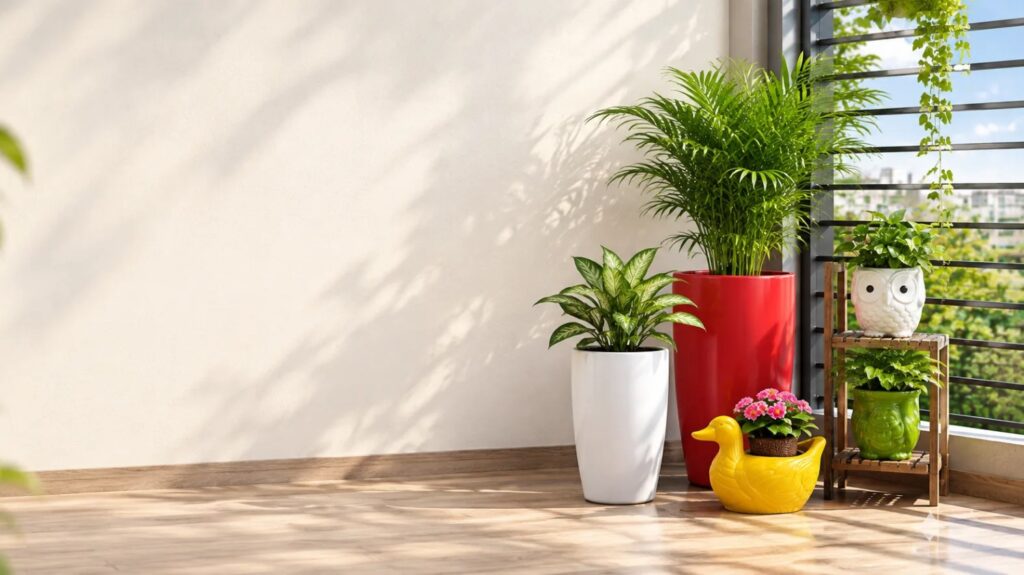
Match the planter to your space: Choose a colour and shape that complement your furniture, flooring and surrounding plants. Neutral shades like white, beige and grey create a clean, modern look, while darker finishes add contrast to bright spaces.
Frequently asked questions
Can roto planters be kept outdoors?
Yes, they are made for indoor and outdoor use. Lighter colours like white and beige stay cooler in strong summer sun.
Can I grow a small tree in a roto planter?
Yes, in the larger sizes. Choose a planter that leaves a few inches of soil around the root ball, add a drainage layer at the bottom, and use a light soil mix.
How do I clean a roto planter?
Wipe it with a damp cloth and a little mild soap. Avoid hard scrubbers that can scratch the surface.